The 10×3 training protocol – a sample workout

muscle-building-back

In this article, we talked about how the 10×3 training protocol can really help in jacking up your muscle mass. However, there are two things that one needs to remember when incorporating this kind of training into your workout.

The 10×3 protocol, if overused, can quickly lead to over-training.

The 10×3 protocol is very conducive for lifting very heavy weights, simply because you are less number of reps in a set. This is great for muscle building. But it also comes with a cost. It can really put a lot of stress on your muscles (obviously), but also your nervous system. The more heavy weights you lift, the more recovery time you need.

So lifting super-heavy weights can really bite you in the back, if done too frequently without proper rest.

The 10×3 protocol is most effective if used for compound exercises.

Compound exercises (like squats, deadlifts, benchpresses, pull-ups etc) are exercises where you can pile on a lot of weight, when compared to single-joint exercises. What I mean is – you can lift much more weight when doing a bench press, than let’s say a tricep kickback. As a result, when doing these compound exercises, you are putting much much load, and hence these are extremely useful (if not downright essential) to pack on new muscle.

Use the 10×3 lifting protocol for compound exercises. They are much more bang for buck for single joint exercises.

With the above two points in mind, let us take a look at a sample exercise regimen, which will incorporate the 10×3 training protocol.


Monday (Lower body, Abs) – Week 1

  • Squats OR Dead lifts (not both), 10×3
  • Leg extensions, 3×10
  • Leg curls, 3×10
  • bodyweight crunches, till failure
  • Front  raises, till failure

Wednesday (Chest, Shoulders, Triceps) – Week 1

  • Any variation of the benchpress, 3×10
  • Military-press, 3×10
  • Side shoulder raises, 3×10
  • Tricep pushdowns (OR) skull crushers, 3×10

Friday (Back, Biceps) – Week 1

  • Barbell rows, 10×3
  • Weighted pull ups, 3×10
  • Lateral shoulder raises, 3×10
  • Bicep curls, 3×10

Monday (Lower body, Abs) – Week 2

  • Squats OR Dead lifts (not both), 3×10
  • Leg extensions, 3×10
  • Leg curls, 3×10
  • bodyweight crunches, till failure
  • Front  raises, till failure

Wednesday (Chest, Shoulders, Triceps) – Week 2

  • Any variation of the bench press, 10×3
  • Military-press, 3×10
  • Side shoulder raises, 3×10
  • Tricep pushdowns (OR) skull crushers, 3×10

Friday (Back, Biceps) – Week 1

  • Barbell rows, 3×10
  • Weighted pull ups, 10×3
  • Lateral shoulder raises, 3×10
  • Bicep curls, 3×10

In Week 3, give your body a break from the 10×3. All workouts should be 3×10.

Week 4, repeat the cadence …


And you’re welcome! Try it, and let me know how it works out (no pun intended).
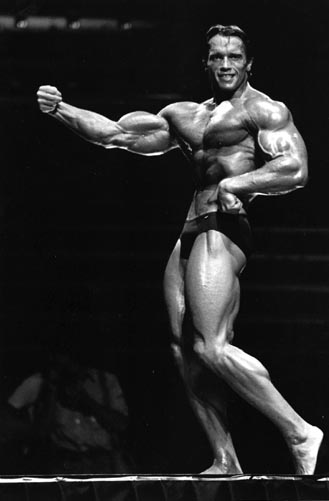
 

The 10×3 workout, for huge muscle gain

0072ArnoldPosing

It is a very well-known fact in body building circles that in order to gain muscle mass, you need to keep increasing the work load that said muscle is subjected to. So much that this ‘truism’ has been drilled into the head of every average Joe/Jane who has stepped into a gym to build more muscle.

In other words – To build more and more muscle, you need to keep increasing the weight that you lift. Otherwise, the body does not have any incentive to increase its muscle mass.

But it is not as simple as that. If the amount of weight lifted was all that mattered, we could do one single all-out rep of our favorite exercise, and go home and sit on the couch, while our muscles grow happily. Obviously, that does not happen. So what gives?

It turns out that not only does the amount of weight matter, but you also need to consider the amount of reps that you do in your workout. More specifically, it is the amount of time that the muscle is being worked out … because your muscles do not know (nor care) about the concept of reps, they only knows how long they are being subjected to a beating!

To put it in a simplified fashion, the following conditions must be satisfied if you want to put on more muscle:

  1. The weight you lift must be above a certain threshold, otherwise the body is not challenged enough to grow.
  2. The number of reps of your exercise should also be above a certain threshold, otherwise the growth-promoting factors are not activated.

All of this begs the question – what is the ideal rep and set range for building mass?

Most article and gym trainers recommend a 3×10 training regimen for beginners – 3 sets of 10 repetitions each, for every exercise. This is totally fine for as long as you are a beginner. A beginner’s body is so unused to physical exercise that it will grow on any crappy exercise regimen.

But as you become more and more advanced, or if you are a hardgainer (someone who has a lot of trouble building muscle), the 3×10 routine will not cut it anymore. If you are finding yourself in a situation where the gains are extremely slow, or have come to a complete stop, try the following:

Just invert the reps and sets for your exercises. Try a 10×3 routine – 10 sets of 3 repetitions each. What does this do?

You are still doing 30 reps for your exercise, but you are lifting a much heavier weight because of the lower number of reps per set. That will really jack up the intensity of your workout. Granted that your workout is longer because of the more number of breaks that you are taking in between sets, but the extra weight that you are lifting more than makes up for it.

Try a 10×3 cadence for your compound exercises first (squat, deadlift, bench press, pull ups etc), because they are more conducive to lifting heavier weights. Stick to a more conventional 3×10 cadence for your single-joint exercises like dumbbell curls or tricep pushdowns.

But do go easy on the 10×3 routine, because it is more stressful on your nervous system, as there are heavier weights involved. This will definitely impact recovery time from your workouts, and can potentially lead to over-training if done too frequently.

In part 2 of this article, we will go through a sample workout plan.

References

https://www.t-nation.com/training/science-of-10-x-3


A simple home-made drink to burn off fat

turmeric-spice-with-amazing-health-benefits
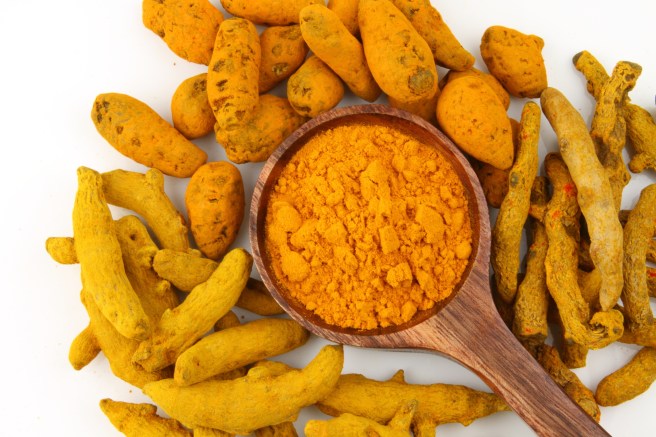
Turmeric – the super spice?

Do you want to lose unwanted body fat and keep it off? Of course you do. Who doesn’t?

Effective and safe weight loss always starts with a proper diet and a properly training regimen. But there are always other things that you can do to help the process along. Here is something that will give you terrific results.

Take a cup of water and add the following ingredients:

  • Half a teaspoon of turmeric
  • A little bit of black pepper
  • Tiny pieces of ginger
  • quarter inch cinnamon stick
  • (optional) some drops of lime for taste

Mix thoroughly and heat the mixture until it is almost close to boiling. Let it cool for a while, and then gulp it down.

Have this concoction at least once a day, maybe even twice, but not more. You can probably have it early in the morning on an empty stomach, and once again just before going to bed.

You should see some good results within a week. And what’s more – all of the ingredients are completely natural.

The magic component here is something called ‘Curcumin’ which is present in turmeric, and also in small amounts in ginger. So how does Curcumin help in fat loss? For starters, it makes you more insulin-sensitive which is extremely essential for weight management. It also helps to increase the body’s core temperature which increases your metabolism and helps in fat burning. It also helps you manage excess cortisol levels (high cortisol levels are very bad news for belly fat).

And that’s not all. Curcumin does a lot of other great things to your body. Here is a few of them.

  • Helps in reducing blood sugar levels, which is great to stave off diabetes
  • It helps reduce cortisol – the stress hormone – to manageable levels
  • It is a powerful antioxidant and helps prevent inflammation
  • As a result, it is very good for painful joints and arthritis, and for recovery from strenuous exercise
  • It is a mood enhancer, as it can cross the blood-brain barrier
  • Because of that, it can also help in prevention of Alzheimer’s disease
  • It may help in reducing total cholesterol levels, and increasing HDL (good cholesterol)
  • It is mildly estrogenic. This is not necessarily bad because it displaces estrogen from binding to its receptors. This helps manage excess estrogen levels in the case of women.
  • It helps increase testosterone in the case of men.
  • It may increase nitric oxide levels which helps in decreasing high blood pressure and is great for cardiovascular health

Isn’t that just wonderful?

So why do we add black pepper to the above mixture? Because curcumin is not really well-absorbed by the human body. Black pepper helps in much better absorption of curcumin.

Ginger and Cinnamon add greatly to Curcumin’s ability to increase insulin-sentivity and control blood sugar levels. Together, all the ingredents make this a potent fat burning drink.

Note though that Curcumin may reduce iron absorption. So if you already suffer from anemia or iron deficiency, curcumin can make it worse. Consult your doctor for their opinion if that is the case.